
The current strikes in the auto sector in the North-West Turkish city of Bursa raise many interesting questions of concern to both communists and militant workers in general.
At the the of writing (18 May), there are four factories on strike, Renault, TOFA? (a joint venture with FIAT) Co?kunuz, and MAKO (both suppliers of automotive parts) supported by over 15,000 workers. The strike started at Renault on the late shift last Thursday (14th May), with the entire workforce of 5,000 joining as their shift were due to go on, and has since spread to the other three factories with further factories have declared they will join the strike within the coming days.
The workers at all the plants have three main demands, the first being a contract the same as the one won by a threatened strike at Bosch in April including a 60% pay rise, the second that there are no victimisations of workers involved in the struggle, and the final one being the removal of the union Türk-Metal from their factories alongside the right to choose their own representatives.
The city of Bursa is one of Turkey's most industrial cities, and is the main centre of auto production, which is Turkey's largest exporting sector, as well as being the home of many other industrial sectors. Workers in other factories in the city have supported the strikers with demonstrations, and there is talk of unrest in auto plants in the nearby city of ?zmit.
This has been a period of high tension in the Turkish metal industry with a lot of anger expressed against not only the main union Türk-Metal, but also against the smaller, more "left-wing" Birle?ik Metal-I?. Türk-Metal is often referred to as bloodsuckers by the workers, and the events at Bosch in April included the workforce resigning from the union to join Birle?ik Metal, only to later rejoin Türk-Metal. Resignations from Türk-Metal at Renault began at the beginning of May, and led to a short strike, which ended in the reinstatement of 16 workers dismissed for leaving the union.
January also saw a national metal workers' strike called by Birle?ik Metal banned by the government as being against 'the national interest'. On the second day the union ordered the workers back to work though some workers continued to protest and struggle.
Two things stand out about this struggle. The first is the way that it has spread rapidly across the sector, and seems to have mobilised the working class of the city as a whole. Many other plants have demonstrated and offered support. Strikers wives have demonstrated and marched to the factory.
Obviously workers are stronger when they are fighting together. The dynamism of the speed at which this struggle is spreading is frightening both the management, and the state itself. The local governor has tried to intervene, and management at both Renault and TOFA? have declared a halt to production.
The second is the complete rejection of the union. Türk-Metal is the biggest single Union in Turkey, and a member of Turk-I?, the largest trade union federation. Even by the standards of the right-wing nationalist Türk-I? confederation Türk-Metal is a particularly disgusting union with a history of using thugs to attack workers. The workers at Renault have set up their own committee with workers in other factories stating that the committee at Renault represents them all. This points to not only the workers taking the struggle into their own hands but also to a determination not to be divided plant by plant. The days ahead will see whether this unity can be maintained and whether the strike can continue to spread.
D. Valerian 18/05/15
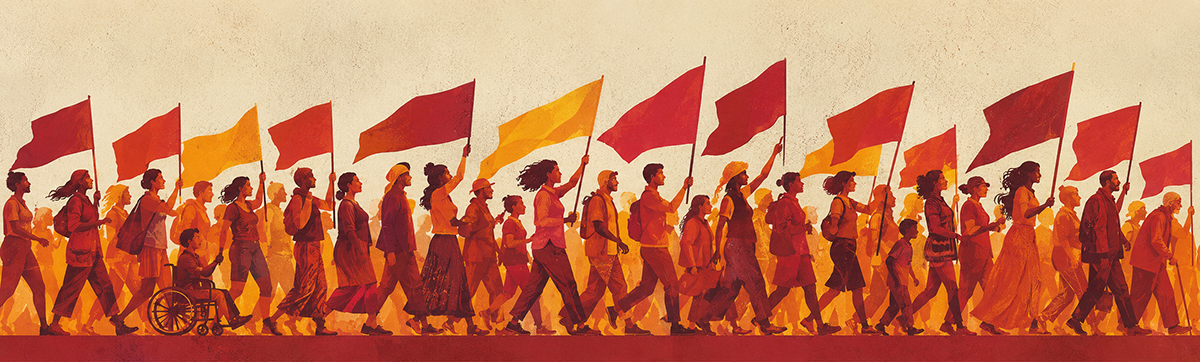
The poster in the picture above the article says "If you don't resist today tomorrow you beg".